
Wallet tracking is the practice of monitoring a specific on-chain address to see every trade it makes in real time. Done well, it gives you a front-row seat to how consistently profitable traders operate across different market conditions. Done carelessly, it pulls you straight into the wash-trading traps and coordinated pumps built precisely to lure copycats.
This guide covers the mechanics of finding and evaluating wallets worth following, the red flags that separate skilled traders from manipulators, and how to set up copy trading so you execute automatically rather than racing to copy manually seconds too late.
What does wallet tracking actually mean on-chain?
Every transaction on a public blockchain is permanently recorded, including the wallet address, token traded, position size, and timestamp. Wallet tracking simply means following a specific address and receiving alerts, or even automatically mirroring trades, whenever that wallet interacts with a DEX.
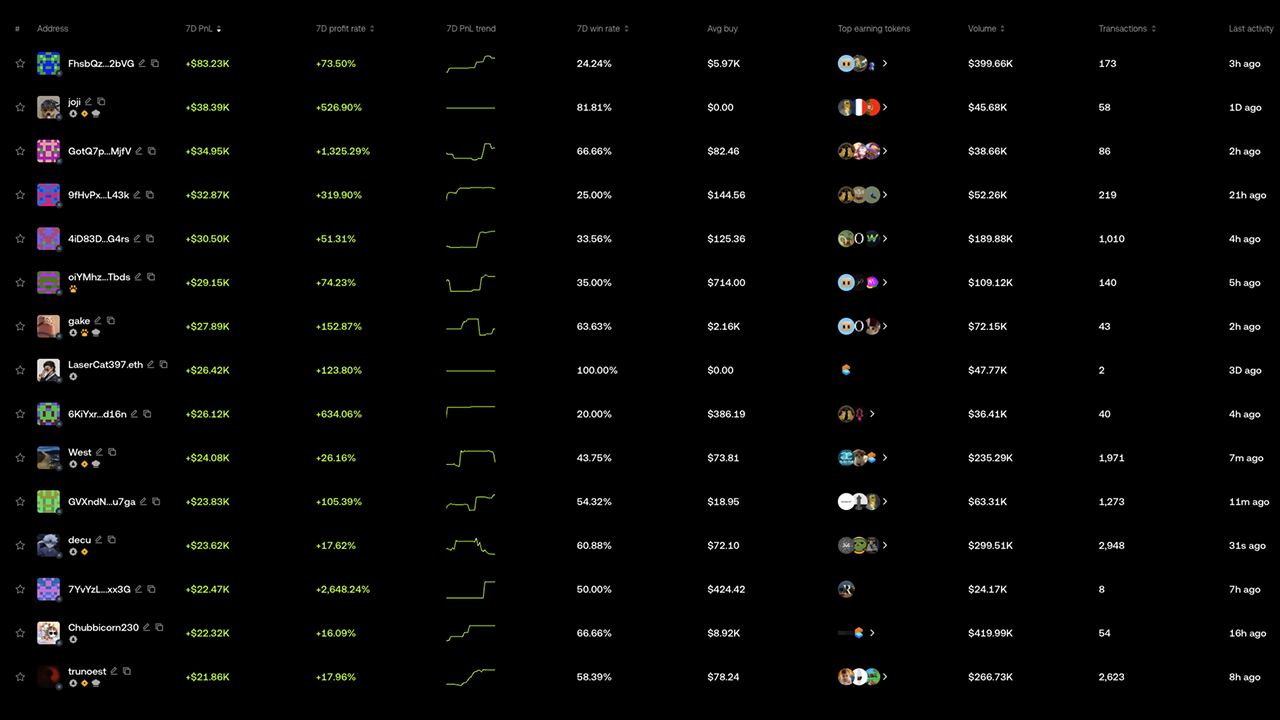
When evaluating a wallet, focus on realized PnL, win rate across at least 50 trades, average holding time, and whether profits come from consistent performance rather than a few outsized wins. A 90% win rate over eight trades is noise, while a 62% win rate over 300 trades across several months is a much stronger signal.
How do you find wallets worth following?
Start with on-chain analytics platforms and filter for wallets that have been active within the last 30 to 90 days, have completed at least 50 trades, and show positive realized returns without relying on a single lucky trade.
Moderate win rates between 55% and 70% are often more trustworthy than extreme numbers. It's also important to compare their activity with token launch timelines. Wallets that buy within the first few blocks and sell minutes later are often insiders or bots rather than skilled traders.
A better pattern to look for is a wallet that accumulates positions early and holds them for days or weeks, suggesting genuine research and conviction.
What are the red flags that signal a manipulator, not a skilled trader?
One of the biggest red flags is a wallet that buys tokens it also promotes publicly. Many influencers accumulate positions, market the token, and sell into the resulting price increase.
Other warning signs include:
- Circular trading between related wallets
- High win rates with fewer than 20 trades
- Sudden shifts in strategy
- Wallets that consistently front-run transactions by milliseconds (MEV strategies)
How do you set up copy trading and wallet tracking on Banana Pro?
Banana Pro, the web terminal at pro.bananagun.io/app, includes a built-in wallet tracking panel that lets you monitor any on-chain address across all popular chains without leaving the interface. You add a wallet address, label it for reference, and the platform surfaces every trade that address makes in real time alongside the token, size, and current PnL context.
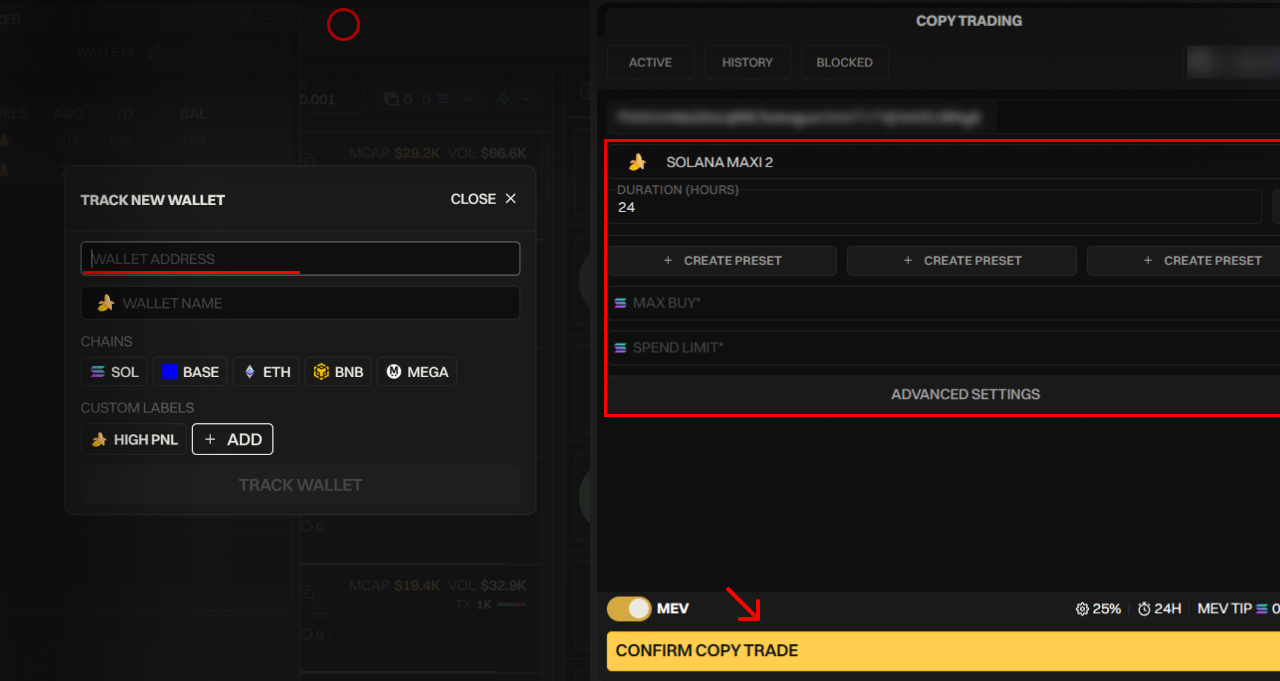
The copy trading feature in Banana Pro lets you link execution directly to a tracked wallet. When that address buys, your configured order fires automatically. You set the position size (fixed amount or percentage of portfolio), a maximum slippage threshold, and optional token filters such as ignoring trades under a minimum liquidity threshold to skip low-cap traps. The platform's MEV protection runs on every copy trade, which matters because without it your mirrored buy is visible in the mempool and can be front-run before it lands.
If you prefer trading from Telegram, the Banana Gun bot also supports copy trading and wallet alerts, which means you can monitor followed wallets and receive execution confirmations without switching to a browser window.
What are the real risks of copy trading on-chain?
Copy trading removes research work, but it doesn't remove risk. Common risks include: The original trader may hedge while you copy the full position, your execution will usually have worse slippage, and large wallets can move the market before your order executes
Many traders use fixed dollar amounts per copied trade instead of percentages and limit the number of simultaneous positions to reduce exposure during volatile periods.
Common questions about wallet tracking
Can I track any wallet address, including whale wallets?
Yes. Any public address on a supported chain is trackable. Whale wallets are popular targets, but copying a wallet that moves markets creates a self-defeating loop: your copy buy adds to the price impact of their entry.
How many wallets should I track at once?
Three to six is a practical limit for active monitoring. Too many wallets produce too many signals and force poor decisions. Quality filtering matters more than volume of wallets followed.
Does copy trading work across all chains?
Banana Pro supports all popular chains, so you can track and copy wallets operating on Ethereum, Solana, Base, and other major networks from the same interface. Chain-specific gas conditions affect execution speed, so results vary by network.
What win rate should a wallet have before I follow it?
No fixed threshold is universally right, but a realized win rate above 55 percent across 50 or more completed trades is a reasonable floor. Context matters: a 60 percent win rate with large position sizes and diversified tokens is more credible than the same rate concentrated in two tokens over six trades.