


Two Years in the Making
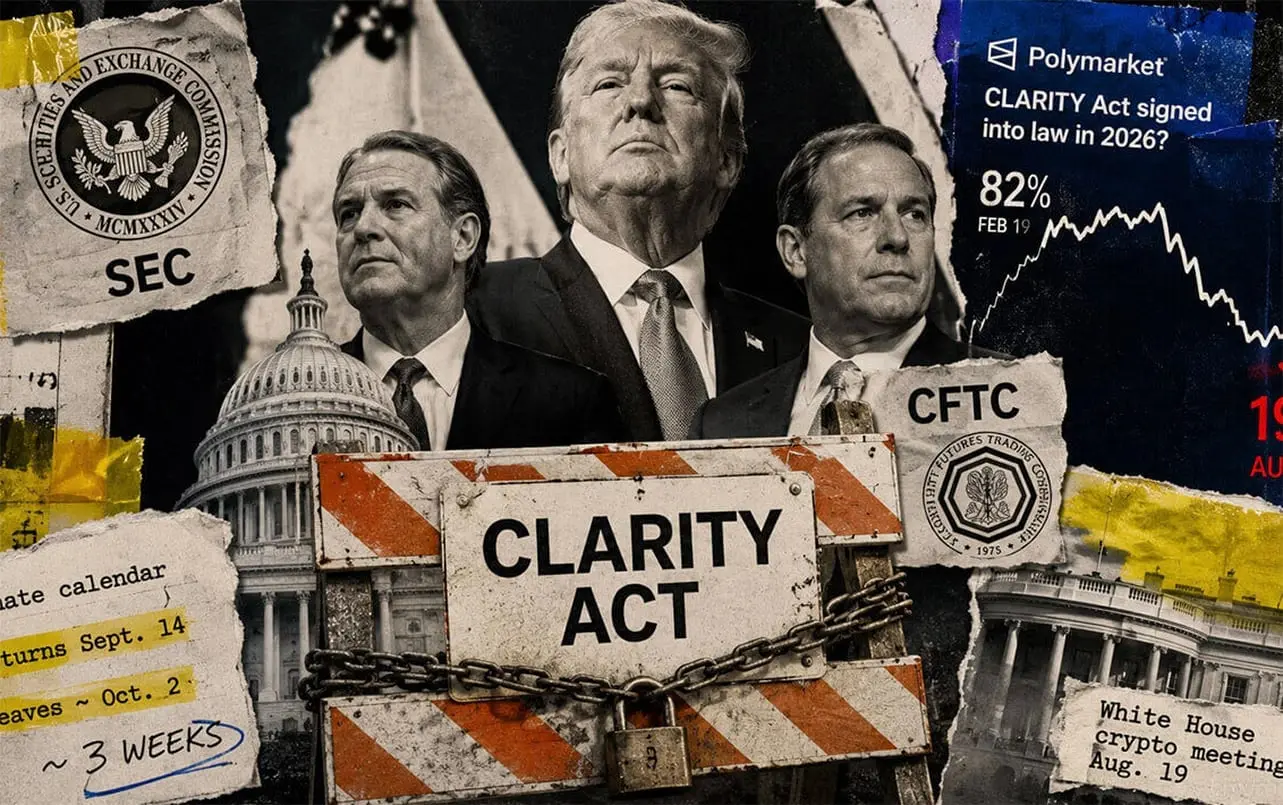
The Digital Asset Market Clarity Act of 2025 (H.R. 3633), better known as the CLARITY Act, is finally at its most pivotal moment yet: a Senate cloture vote that will decide whether this legislation lives or dies before the next Congress.
Here's the quick history: the bill passed the House by a surprisingly decisive 294–134 margin on July 17, 2025. It then crawled through the Senate Banking Committee, clearing 15–9 on May 14, 2026. Now, on September 15, 2026, the Senate votes on cloture. If it clears 60 votes, ends debate and paves the way for a final passage vote. Miss that threshold? The bill stalls, and we're likely starting from scratch next Congress.
As Changelly via Google News noted: "If cloture gets 60 votes, the Senate moves to formal debate, amendments, and an eventual up-or-down vote on passage. If it falls short, the bill is effectively dead for 2026."
So… What Does the CLARITY Act Actually Do?
The SEC vs. CFTC Split
The bill draws a clear(ish) line in the regulatory sand:
- SEC keeps its grip on securities, investment contracts, and tokenized securities.
- CFTC gets exclusive jurisdiction over digital commodity cash and spot-market transactions handled through registered digital commodity exchanges, brokers, and dealers.
This is a big deal. For years, both agencies have been playing tug-of-war over which assets they own. The CLARITY Act tries to end this war, at least on paper.
DeFi Exemptions (Title III / Blockchain Regulatory Certainty Act)
This is the part the degen community has been watching most closely. Section 15H lays out six categories of activity exempt from exchange registration requirements:
- Transaction validation
- Oracle provision
- Node operation
- Wallet software development (excl. self-custody)
- UI interfaces
- Liquidity pool operations (if decentralization criteria are met)
The bill also defines what counts as a "decentralized finance trading protocol": multiple participants transacting under predetermined, non-discretionary rules, with no single entity controlling user assets at any point.
DAOs get a nuanced treatment too. DAO voting isn't automatically flagged as a controlling entity, but if governance is heavily concentrated, expect regulators to come knocking.
As Gate.io Learn explains: "Software developers who do not control, custodian, or hold others' funds and private keys should not be classified as money transmitters or bear BSA intermediary obligations."
Stablecoin Yield
Section 404 drops a significant restriction: no passive returns that are economically or functionally equivalent to bank deposit interest. That means your favorite stablecoin yield product might need a serious redesign.
Rewards tied to actual usage are preserved pending joint SEC–CFTC–Treasury rulemaking within 12 months of passage. So there's a grace period, but the clock starts ticking the moment this bill is signed.
Centralized Protocols
If your protocol retains centralized control over functions, consensus rules, or operations, you'll need to register with the CFTC as a digital commodity exchange, broker, or dealer.
Criminal Liability Protections Were Quietly Removed
Earlier versions of the bill included statutory criminal liability protections for DeFi developers. The latest Senate draft removed them entirely. The Blockchain Regulatory Certainty Act (BRCA) still preserves the money-transmitter exemption, but developers no longer have an explicit statutory shield from criminal prosecution.
The industry is pushing back hard. According to Coinpedia: "Critics are now pushing for floor statements and a presidential signing statement making clear that such criminal exposure was never intended under the bill's original DeFi provisions."
The catch? Floor statements and signing statements carry zero statutory force. They're more "vibes-based legal clarity" than actual protection.

What Happens Next?
If Cloture Passes (60+ Votes)
- Senate proceeds to formal debate, possible amendments, and a final passage vote within days or weeks.
- SEC and CFTC kick off joint rulemaking on stablecoin yield exceptions (12-month timeline).
- CFTC begins publishing digital commodity broker/dealer registration rules.
- Agencies start clarifying what "decentralization" actually means in practice.
If Cloture Fails
- Bill stalls. No revival expected before next Congress. We wait. Again.
What This Means For Crypto
The adaptation process starts immediately upon passage, and it won't be painless:
- Stablecoin yield products (lending platforms, on-chain savings tools) face mandatory redesigns to strip out passive interest equivalents.
- Semi-centralized protocols face higher compliance costs and likely restructuring toward verifiable decentralization — think governance timelocks, auditable upgrade logs, and multi-sig controls.
- Expect a dual-structure boom: U.S.-facing registered entities handling compliance, while core open-source protocol layers remain permissionless. Some platforms will geo-bifurcate with a compliant U.S. entry point and a permissionless global layer.
- Developers building without custody retain federal money-transmitter exemptions, but the removed criminal liability language means legal uncertainty isn't fully resolved.